A Practical Framework for Managing Multiple Brand Accounts Without Burnout
Key Takeaways:
- Keep each brand’s voice, audience, assets, channels and approval rules clearly separated.
- Batch planning, writing and scheduling tasks to reduce repeated switching between different work.
- Use one visible calendar and approval flow so owners, deadlines and publishing status remain clear.
- Set limits for active campaigns, urgent requests, notifications and after-hours checking, then review capacity weekly.
Managing several brands becomes more sustainable when tools for social media management support a clear system.
Separate each brand, document repeatable rules, batch similar tasks, centralise scheduling and approvals, and protect capacity. The goal is not to automate every decision. It is to reduce unnecessary switching, rechecking and last-minute work while keeping brand judgement human.
Tools for social media management can save time, but they cannot fix a chaotic multi-brand process by themselves. Constant notifications, platform changes and brand-specific decisions can make the day feel fragmented.
Microsoft found that workers receive a ping about every two minutes, while the WHO describes burnout as an occupational phenomenon linked to unmanaged workplace stress.
Start with SocialBee’s 2026 social media content calendar to map work before publishing begins.
1. Separate Each Brand Before Work Begins
Give every brand a separate operating area before creating content. Record its audience, voice, goals, platforms, time zone, visual assets and approval owner in one place.
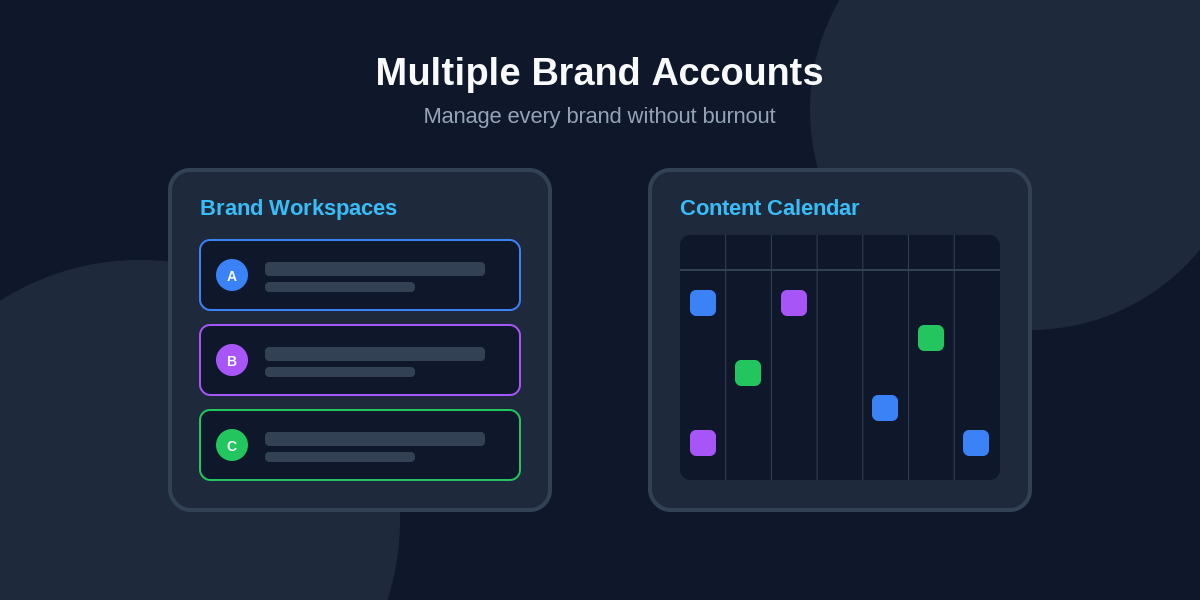
This reduces mental rechecking and lowers the chance of choosing the wrong account or brand voice. SocialBee Workspaces can keep different clients or businesses apart inside one account, with their respective social profiles grouped together. Separation should make context easier to recognise, not create extra administration for routine work.
2. Standardise Repeatable Decisions
Create a one-page playbook for each brand covering content pillars, posting cadence, preferred formats, calls to action, prohibited topics and approval expectations. This turns recurring choices into documented rules instead of fresh decisions every week.
Reusable templates can cover briefs, captions and review checklists. SocialBee Content Categories can also group posts by purpose, such as educational or promotional content. Keep strategy and brand-sensitive judgement flexible; standardise only decisions that repeat.
3. Batch Work by Task, Not by Brand
Plan the week around task type rather than jumping from one brand to another whenever a message arrives. Block time for research, caption writing, visual briefs, reviews and scheduling, while keeping each brand’s materials labelled.
APA research on task switching shows that repeated switches carry time costs, especially with complex work. After an approved content batch is ready, schedule posts together instead of reopening the publishing task throughout the day.
4. Centralise Scheduling and Approvals
Scattered messages make it harder to see what is drafted, approved, scheduled or blocked. Keep publishing status, deadlines and ownership together when using social media management platforms. Schedule routine posts in advance and give reviewers clear deadlines, escalating only exceptions or higher-risk content.
SocialBee’s Scheduler shows planned posts across profiles, while Workspace roles can separate who creates, approves, edits and publishes content. This keeps collaboration clearly visible without adding checking.
5. Set Capacity Boundaries and Review Weekly
Decide how many campaigns can stay active, what qualifies as urgent and when notifications will be checked. Protect after-hours time unless an issue needs attention, and leave buffer space for community replies or changes.
Review the workload every week. Remove low-value tasks, rebalance ownership and reduce posting volume when quality starts slipping. There is no brand limit; capacity depends on channels, complexity and approval load.
Manage Multiple Brand Accounts With a Sustainable System
Managing multiple brands depends on boundaries, repeatable rules and fewer unnecessary switches, not longer working hours. This protects attention while keeping accounts distinct.
SocialBee brings scheduling, Workspaces and collaboration together. Start a 14-day free trial to organise your process and test it with your team.
FAQs
1. How can one person manage multiple social media accounts without getting overwhelmed?
Separate brand contexts, batch similar work, schedule routine posts, set priorities and protect realistic capacity. Automation should support human judgement, not replace audience engagement.
2. Should each brand have a separate content calendar or one master calendar?
Use a master calendar for capacity planning, but keep each brand’s content, assets, approvals and publishing details clearly separated within that shared planning view.
3. Is it better to batch social media content by brand or by task?
Batch similar tasks when practical, while keeping individual brand context visible. This reduces unnecessary switching without mixing voices, assets, priorities or specific approval requirements.
4. What should be automated when managing multiple brand accounts?
Automate repeatable scheduling, publishing, reminders and reporting. Keep strategy, sensitive responses, final quality checks and brand-specific decisions under direct human control where judgement matters.
5. How often should a multi-brand social media workflow be reviewed?
Review the workflow briefly each week and assess performance more deeply each month. Adjust volume, ownership or processes when delays or quality problems appear.